Exterior rendering
Render Colour Change Nottingham | Coatings and Preparation
A colour change can renew the appearance of render that is suitable to retain. It is a different proposal from replacing the render itself. The first question is therefore whether the existing surface can support the chosen treatment, followed by what cleaning, repairs and preparation are required before the new colour is applied.

On this page
Start with a condition decision
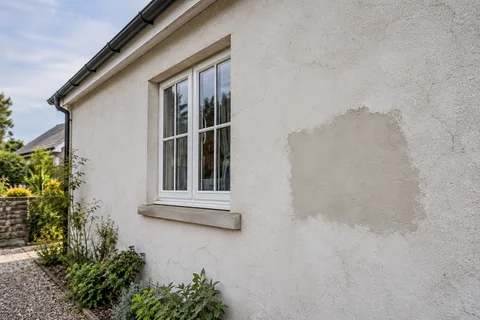
Describe what you dislike about the current wall: faded colour, a dated shade, patchy appearance or visible damage. These concerns can overlap, but they do not all have the same remedy. A coating proposal should identify the condition of the existing render and any previous paint. Loose, friable or unsuitable layers must be addressed through an appropriate specification rather than treated as a surface that merely needs covering.
If the main concern is cracking or detached areas, begin with render repair. If the covering needs substantial replacement, compare that scope before committing to a cosmetic treatment. A respray should not be sold as a way to avoid a necessary investigation. The assessor should explain why retaining the existing material is reasonable and what limitations remain after the proposed work.
- Clean Washed down, with algae and mould treated and left to work.
- Repair first Cracks and hollow patches are repaired before any coating.
- Prime or stabilise Where the coating maker requires it on that surface.
- Coating Usually two coats of a breathable masonry or silicone coating.
The usual order of work. The survey and the chosen products decide the actual steps.
Find out which coating is proposed
Ask for the product reference, suitability for the existing finish and preparation instructions. The word respray describes an application method, not a guarantee that any coating will suit any render. Some details may be treated differently from open wall areas, and the quotation should explain the intended approach. Where the previous coating is unknown, record that uncertainty and ask how compatibility will be assessed.
Do not choose a colour first and assume the desired product can then be put on the wall. The background and proposed system narrow the appropriate options. On traditional fabric, the final coating needs to be considered alongside the lime or other retained material. A decorative treatment chosen only for appearance could undermine an otherwise carefully planned repair, so include the whole finish arrangement in the discussion.
Use cleaning to reveal the surface, not to prove a diagnosis
Dirt and surface growth can alter the apparent colour. A suitable cleaning assessment may show that part of the problem is maintenance rather than a need to change the finish. It may also reveal defects that were harder to see. Ask for a method compatible with the existing surface and a test where needed; an aggressive treatment should not be assumed simply because the marks look stubborn.
Where staining follows a downpipe or occurs beneath a roof junction, establish whether another component needs attention. Recolouring the mark will not explain its source. Record the location and observations so the relevant inspection can be included. The proposed cleaning, repair and coating stages should have a clear sequence, with enough opportunity to assess the background before the final treatment conceals it.
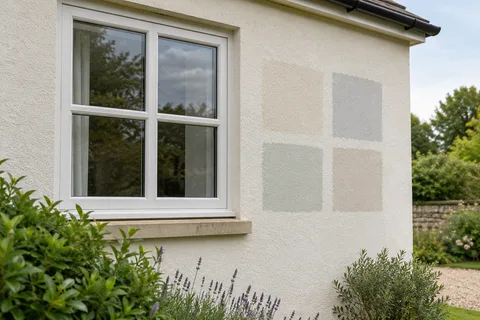
Test the colour beside what will remain
Window frames, brickwork, soffits and rainwater goods can make the same render colour appear different. Compare a physical sample against those retained elements. A screen image is useful for narrowing preferences, but not for approving the final colour. Try the sample on the most visible elevation and another area with different light. Make the decision at a normal viewing distance as well as close to the wall.
If only one elevation is being coated, consider its meeting point with the original finish. A deliberate contrast may be easier to control than an attempted exact match to weathered material. If the whole exterior will change, record any excluded areas clearly. Include returns, recesses and the backs of accessible fittings in that discussion so there is no disagreement later about an apparently unfinished strip.
| Stage | Required clarity |
|---|---|
| Assessment | Why the existing surface can remain |
| Preparation | Cleaning, repairs and compatibility checks |
| Protection | Windows, roofs, neighbouring surfaces and access |
| Colour | Approved physical sample and product reference |
| Completion | Included returns and reinstated fittings |
Treat masking and access as part of the work
A coating project still requires suitable access and protection. Discuss nearby glazing, vehicles, planting and neighbouring property before the application method is selected. The contractor should explain how the work area will be managed and which conditions affect application. A narrow passage or shared entrance can be as relevant to a coating job as to a replacement render project.
Record which fittings will be removed and which will be protected in place. If a fixture needs specialist disconnection, settle responsibility before work starts. Residents should know when windows or doors must remain closed and how everyday access will be maintained. These arrangements should be proportionate to the work, but they should not be omitted because the proposed surface treatment sounds less substantial than re-rendering.
Decide what a colour change will and will not alter
A coating generally follows the texture already present. It should not be represented as a way to turn a coarse, uneven wall into a new smooth render system without the required preparation and specification. If changing the texture is the main objective, compare the appropriate rendering options. The silicone rendering guide helps explain why a new finish system differs from applying a decorative coating to existing work.
At completion, compare the included areas against the agreed scope and sample. Keep the product and colour references, the date and any maintenance instructions. If later repairs are needed, those records help identify a compatible approach, although weathering can still affect visual matching. Do not assume that a colour change makes the wall maintenance-free or eliminates the need to look after gutters, joints and fittings.
Common questions
Can pebbledash be recoloured?
A suitable treatment may be possible after condition and compatibility checks. The existing texture will still influence the result, so colour change should not be confused with removal.
Will every crack disappear under a coating?
No. Defects need an appropriate assessment and repair. A coating specification must not be used as a substitute for resolving an unsuitable background.
Can I keep one wall its current colour?
Yes, if the scope and meeting points are deliberately planned. Confirm the appearance at corners and any narrow returns that connect the two treatments.
Does spray application remove the need for preparation?
No. The application method does not establish surface soundness, cleanliness or compatibility. Those requirements belong in the preparation scope.
See housing and planning information for Nottingham and nearby places, including the source and geography behind each figure.